
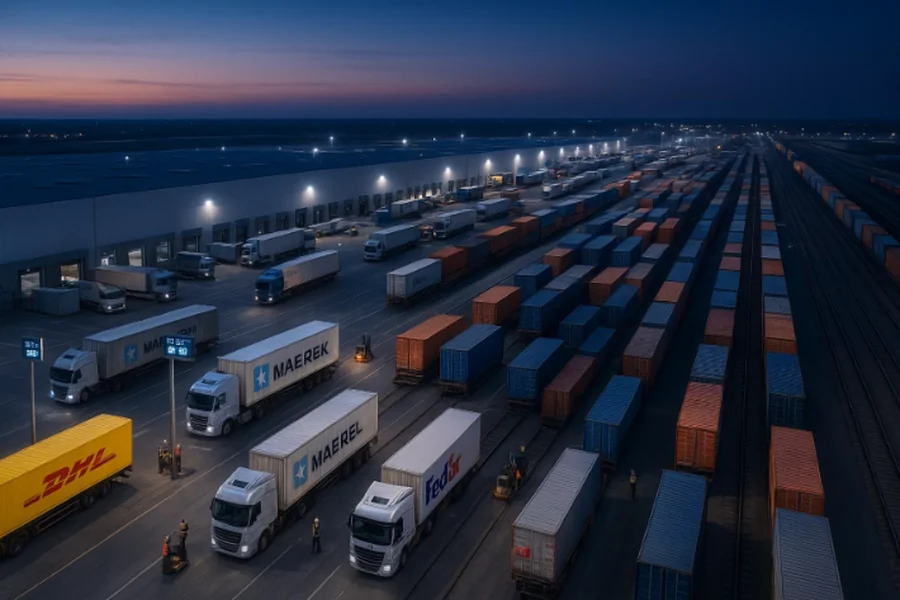
Poland has a strong economy and a central location in Europe, which makes it a tempting place for international brands that want to grow. With a consumer market of over 37 million people (as of 2024) and steady GDP growth for more than 20 years, many companies see room to grow. Its location also helps brands reach more than 500 million consumers across Europe, so Poland can work well as a first step for bigger plans across the region.
In 2022, Poland brought in about €22.3 billion in foreign direct investment, helped by new projects in fast-growing industries like automotive, electronics, and chemicals. Investment incentives in its 14 Special Economic Zones have also played a big part.
At the same time, the opportunity comes with real challenges. Poland has simplified some rules and aligned many regulations with EU law, but starting and growing a business here is still rarely simple. International brands often face issues like detailed legal and tax rules, cultural differences, and day-to-day operational barriers. Getting through these issues takes more than a strong product. It takes a clear understanding of how things work locally and, in many cases, support from experienced local partners. For example, closing communication gaps and building trust often works better with help from an international PR agency Poland. Below are the main challenges brands face in Poland and practical ways to deal with them.
Legal and Regulatory Barriers for Foreign Companies
Poland’s legal and regulatory setup can feel like a large set of rules and deadlines that are easy to miss. The legal system is generally stable and follows EU standards, but there are many requirements, and they can change quickly. New tax rules may appear fast and sometimes with limited public discussion, which can make planning harder for foreign investors.
Complex Compliance and Reporting Requirements
Companies in Poland must meet a wide set of reporting duties. For example:
- Financial statements: filed with the National Court Register (KRS) within 15 days after shareholder approval.
- Corporate income tax: annual returns.
- VAT: usually monthly or quarterly filings.
- Statistics reporting: some companies must report to the Central Statistical Office (GUS).
- Social security: employers submit monthly contribution reports to the Social Insurance Institution (ZUS).
With different formats and deadlines, many foreign companies rely on local accounting or compliance support to avoid missed filings and penalties.
Starting a Legal Entity: Registration and Permits
A common early task is setting up a legal entity. Popular options include a limited liability company (spółka z ograniczoną odpowiedzialnością or sp. z o.o.) and a joint-stock company (spółka akcyjna or S.A.). The setup often includes:
- Choosing the right legal structure
- Checking and registering the company name
- Paying the minimum share capital
- Registering with the National Court Register (KRS), which can be done online
- Registering for taxes (including VAT if required)
- Registering with ZUS
- Opening a business bank account
Each step comes with specific documents and local procedures, so delays often happen when paperwork is incomplete or not prepared in the expected way.
Differences in Tax Obligations and Indirect Taxes
Poland’s tax system offers incentives in some cases, but it also requires careful planning. Key points include:
| Tax type | Typical rate / notes |
| Corporate Income Tax (CIT) | 19% standard rate; 9% for some smaller businesses (under a EUR 2 million threshold, and for income other than capital gains) |
| VAT | 23% standard; reduced 8% and 5% for selected goods/services |
| Personal income tax | Progressive, commonly 17% and 32% |
On top of this, companies may face indirect taxes, customs duties, and some regional or sector-related charges. Also, how a product is classified for tax can differ by country. A sale that is tax-free elsewhere might be treated as a service or a digital product in Poland, with different VAT rules.
Permanent Establishment and Transfer Pricing Rules
A company may create a “permanent establishment” in Poland even without opening a full local subsidiary. This can happen through activity such as having a small sales team, a warehouse, or regular meetings that look like ongoing business operations. If that happens, local tax duties may apply.
Transfer pricing is another key topic for global groups. When related companies trade across borders, the internal prices must follow the “arm’s length” principle (as if the parties were unrelated). Polish authorities, like regulators in many countries, watch these transactions closely. Mistakes can lead to audits and large penalties.
Currency Management: PLN, EUR, and GBP Challenges
Poland uses the Polish Złoty (PLN). For international brands that report in EUR, GBP, or USD, exchange rates can change results fast. Revenue growth in PLN may look smaller once converted into the head office currency. Profit can also shrink if costs are in a stronger currency while sales are in a weaker one.
Common ways to manage this include:
- Structuring operations so revenue and costs are mostly in PLN
- Using hedging tools like forwards
- Using pricing that can adjust if currency moves stay in place
- Managing cash carefully, including holding more than one currency and choosing when to convert
Implementing EU Law and Adapting to Local Legislation
As an EU member, Poland has put many EU directives into national law. This includes rules for consumer protection, GDPR data privacy, competition, and environmental standards. Brands must follow both Polish law and EU-level rules, which can require changes to established policies and workflows. Even with EU alignment, local interpretation and ongoing updates can still be hard for companies that are new to Poland.
Stability and Transparency of the Legal System
Poland generally offers a stable legal framework and protections that match EU standards. Courts are independent, which supports a safer climate for business. Still, some investors mention concerns about how predictable or transparent new rules can be, especially when tax changes happen quickly. There are also limits on foreign ownership in some strategic sectors and restrictions around buying certain types of land (such as agricultural and forest land), so companies need to check these early.
Operational and Workforce Challenges
After the legal setup, brands must handle daily operations in Poland and manage local teams. Poland has many skilled workers, but hiring and team management still require a local approach.
Hiring Processes and Labor Market Dynamics
Poland is often praised for its talent. It has more than 350 higher-education institutions, over 1.2 million students, and close to 300,000 graduates each year. This supports many roles, including product development and operations. Poland also has a strong business services sector, with over 1,300 centers and more than 300,000 employees (around 70% of all BSS centers in Central and Eastern Europe).
At the same time, a tight labor market can make hiring more competitive. Some factors, such as a lower retirement age and higher social spending, may also affect future growth and talent availability.
Employment and Payroll Documentation
Polish employment law is based on the Labour Code. Employment contracts must be in writing and clearly cover details like salary, working hours, duties, contract type, and start/end dates. Standard working time is 40 hours per week. In 2024, the monthly minimum wage is regulated by the government, with the average minimum not dropping below 4,270.60 PLN gross. Getting these documents right matters, because errors can lead to compliance problems.
Social Security Charges and Employer Obligations
Social security is a major cost and process area. Employers and employees both contribute to a system that covers pension, disability, accident, and health insurance. While exact rates can vary, total contributions are often around 35% of gross pay. Employers must also submit monthly ZUS reports. This calls for solid payroll processes and staff who understand local rules.
Accessing and Integrating Polish Talent
Hiring is only the first step. Companies also need to integrate people into an international structure. Poland’s strong graduate base and growing number of ICT specialists make it attractive, especially in cities such as:
- Kraków: known for business services and technology
- Wrocław: often called the “Polish Silicon Valley,” linked to engineering and tech growth
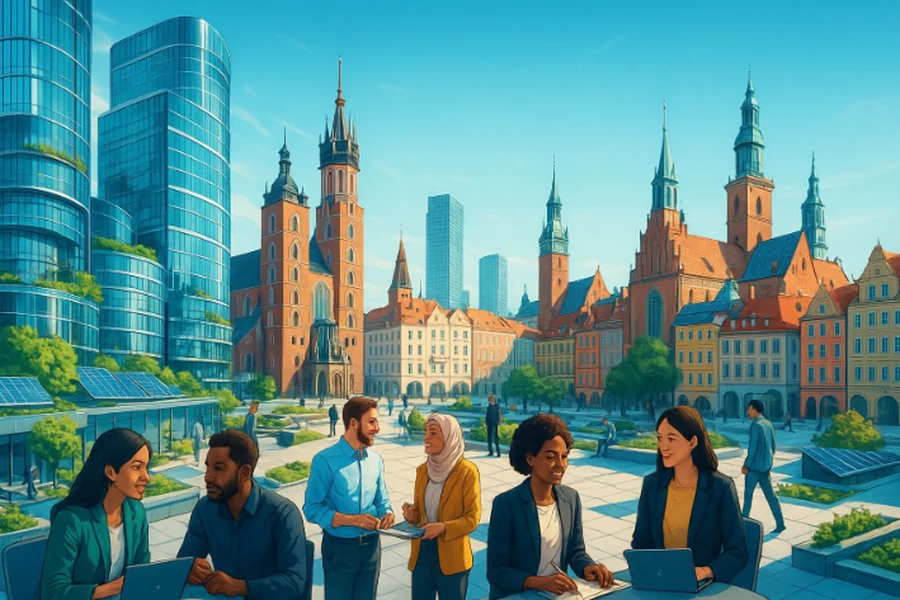
To keep employees long term, companies often need to support cultural integration, offer language help where needed, and provide clear career paths.
Financial and Banking Obstacles
Money management in a new country comes with local rules and practical limits. In Poland, brands should plan for bank account setup, cross-border payment friction, and new digital invoicing requirements.
Opening a Business Bank Account
Opening a local bank account is a basic step, but it usually requires specific paperwork. Banks often ask for:
- Company registration documents, including proof of KRS registration
- A notarized copy of the articles of association
- ID documents (for example, passports) for company representatives
- Tax identification details, including proof of tax office registration
If any document is missing or not in the correct format, the process can slow down and delay the wider launch plan.
Cross-Border Payments and Currency Fluctuations
Cross-border payments can create extra fees and extra steps in a PLN-based market. Polish customers usually want to pay in PLN with payment methods they already use. If customers face foreign transaction fees or complicated payment steps, they may leave without buying. Cross-border transactions can also be rejected more often due to fraud checks, which can reduce sales and increase support requests.
Many brands improve results by using local acquiring (processing payments through local Polish networks), which can raise acceptance rates and reduce hidden costs.
Standardizing Invoicing and Contracting
Poland is moving quickly to digital invoicing. E-invoicing is expected to become mandatory for companies with annual revenue above PLN 200 million from February 1, 2026. This can improve speed and accuracy, but it also means companies must update their systems and processes.
Also, contracts and formal documents often need to be written in Polish for official use, even if internal work is done in English. That creates an ongoing need for strong translation support to avoid errors.
Building Payment Rails that Match Cashflow
Scaling payments is more than “accepting PLN.” Companies may need to manage:
- Local currency pricing and settlement
- European payment compliance (including PSD2)
- Disputes, chargebacks, and fraud handling across countries
- In some cases, tax collection and reporting connected to payments
Many brands improve checkout performance by localizing the full purchase flow: prices in PLN, clear taxes and duties, familiar address formats, and payment options like installments where customers expect them. The goal is a checkout that feels normal and safe for Polish buyers.
Cultural and Language Hurdles in Market Entry
Legal and financial topics are visible obstacles. Culture and language can be harder to spot, but they can have a big effect on sales, trust, and long-term success in Poland.
Language Barriers in Communication and Documentation
Polish is the official language. Even if some company materials can be in English, this is not true in every situation. Official documents and contracts often need Polish versions for legal strength and compliance. On the customer side, missing Polish support or Polish product information can quickly reduce trust and sales. Professional translation is usually required for accuracy and legal safety.
Business Etiquette and Negotiation Style
Business in Poland often starts formally and becomes more relaxed over time as trust grows. Punctuality matters, and meetings are usually treated as fixed commitments (though being a few minutes late is often accepted). Many people confirm meetings the day before.
In early meetings, it is common to use “Pan” (Mr) or “Pani” (Ms) plus the surname until someone invites first-name use. Formal dress is typical in important meetings. Polish partners may speak directly, including pointing out what needs improvement, which can feel different to people from more indirect cultures. Decisions can take time, because more than one level of approval may be involved. Business cards are still common, so it helps to bring enough. After-hours messages can happen, but keeping clear professional boundaries still matters.
To sell well, brands need to understand how Polish customers buy. This includes where they shop (online vs. physical), which payment methods they prefer, and how much they rely on reviews.
A key local factor is the Sunday Trade Ban. Since 2020, most Sunday retail activity is limited to a small number of Sundays each year (such as two before Christmas, one before Easter, and the last Sundays of January, April, June, and August). This has a direct effect on retail planning and staffing.
While income inequality is lower than in many advanced economies, there is still a gap that affects buying power and product positioning. Preferences also vary by category, such as luxury items, comfort buying from foreign brands, and the habit of checking reviews first. Brands that ignore these patterns often see higher cart abandonment and lower retention.
Adapting Marketing Strategies to Local Culture
In Poland, foreign brands often have to build their image from the ground up. Many Polish consumers are skeptical of classic advertising and may trust earned media and strong PR more. This means marketing needs to match local habits, seasonal patterns, and current topics. A campaign that worked well in another country may not work in Poland. If localization is weak, companies can waste budget and take much longer to build a name.
The Role of Localization in Product-Market Fit
Strong results in Poland depend on real product-market fit, and that looks different in every country. Localization may include changes beyond marketing. Examples:
- Food: adjusting recipes for local tastes (more or less sweet, salty, spicy, etc.)
- Tech: changing features, device priorities, or defaults based on local use, privacy expectations, or regulations
Trust also grows through localized language, examples, and tone. Policies like returns, payments, and delivery expectations often need local changes too. A site that does not show prices in PLN or uses strange address formats can feel “foreign,” which can reduce conversion and loyalty. Brands that take the time to fit into local expectations often build loyalty faster and may even find new ideas that help their global product.
Logistics, Infrastructure, and Regional Considerations
Moving goods and choosing where to operate can shape the success of a market entry. Poland offers strong logistics options, but there are still risks and regional differences.
Assessing Infrastructure for Distribution and Delivery
Poland has multiple airports, major ports, and wide rail and road networks, which supports shipping across Europe. The World Bank Logistics Performance Index ranked Poland 26th out of 139 countries in 2023, with a score of 3.6, showing a generally strong logistics setup.
Still, international supply chains add extra risk: longer routes can mean higher costs, longer lead times, and more exposure to disruption (for example, strikes or port closures). Import tariffs, customs steps, and local rules can also slow down goods and raise costs, so planning and supply chain control are important.
Choosing the Right Polish City or Region
Picking the right location inside Poland matters as much as the decision to enter the country. Cities offer different strengths:
- Warsaw: the biggest business center, close to national institutions and large corporations. In fDi’s 2025 ranking, Warsaw was in the top three among major cities and ranked second in Human Capital and Lifestyle and in Business Friendliness (behind London in those subcategories).
- Kraków: strong in business services and skilled talent, and a major hub for shared services centers.
- Wrocław: linked to engineering and tech growth; it attracted the second-largest capital investment among Polish cities and won fDi’s European City of the Future in the mid-sized cities category.
Brands should match the city choice to operational needs, talent needs, and closeness to customers and partners.
Evaluating Costs Versus Talent Availability
Brands need to balance cost and access to skills. Poland often offers lower labor costs than Western Europe, but strong demand in tech and specialist roles can push salaries up.
Special Economic Zones (SEZs), now part of the Polish Investment Zone, can reduce costs through tax exemptions and employment incentives, and they offer prepared investment sites across the country. A clear cost-benefit review that includes both ongoing costs and talent supply is key for steady growth.
Marketing and Public Relations in the Polish Market
Clear communication and trust-building are central to market entry. In Poland, brands should adjust to local media habits and how consumers judge credibility.
Navigating Local Media and PR Opportunities
Poland has a mix of traditional and digital media that shapes public opinion. Key outlets include newspapers like Gazeta Wyborcza and Rzeczpospolita, online portals like Onet.pl and Wirtualna Polska, and channels such as TVN24. With internet penetration above 87%, Poland is highly connected, and social media plays a major role. Facebook, Instagram, LinkedIn, and TikTok are widely used, which creates strong PR opportunities, including partnerships with Polish influencers and industry experts coordinated by a local agency like All 4 Comms.
Trust in PR Versus Paid Advertising
A common pattern in Poland is lower trust in standard advertising and higher trust in earned media and strong PR. This makes PR useful for positioning and reputation. Well-placed articles, media interviews, and thought leadership can build authority and long-term trust. Compared to Germany, France, or the UK, PR campaigns in Poland are often less expensive and can deliver strong ROI through influencers and event sponsorships.
Leveraging Digital Transformation and Media Engagement
Because Poland is moving fast in digital channels, brands should build a full digital PR approach. High internet use and active social networks make it easier to speak directly to customers and build communities. Poland’s generally stable and business-friendly rules also help companies run campaigns without heavy red tape. Brands that focus on real value and clear messaging can build visibility and trust faster.
Risk Management and Strategic Recommendations
Success in Poland depends on spotting risks early and building practical plans to reduce them. This includes legal, financial, cultural, and operational areas.
Mitigating Regulatory and Currency Risks
Local legal and tax support from the start helps companies follow rules and avoid expensive mistakes, especially when tax rules change. For currency risk, brands can protect margins by:
- Keeping both revenue and costs mainly in PLN where possible
- Using hedging tools such as forward contracts
- Using pricing that can adjust if currency moves last
- Using smart cash planning (multi-currency balances, planned conversion timing)
Preparing for Cultural Adaptation
Cultural fit is a basic requirement, not a “nice to have.” Brands should research Polish consumer habits and local business etiquette. This means going beyond translation and doing real localization: language, examples, tone, and references. Products and services may need changes for local fit, and policies (returns, payments, delivery) should match local expectations. Polish-language customer support on preferred local channels also signals commitment and builds loyalty.
Building Local Partnerships and Networks
A strong local presence often depends on local partnerships. This can include hiring local leaders, building supplier relationships, and finding business partners. Some companies reduce risk by buying a local business instead of starting from zero, using existing knowledge and networks. Good partners can also provide early warnings about regulatory changes and shifts in customer behavior.
Refining International Payment Processes
To reduce payment issues and improve conversion, brands should adjust payment systems for Poland. This often includes local acquiring through Polish banking networks, which can raise acceptance and reduce customer fees. Offering popular local payment methods (plus international cards) is also important. Checkout should be localized: PLN pricing, clear taxes and duties, familiar address formats, and a smooth flow that feels safe for Polish buyers. Payment providers that support multi-currency management, compliance, and fraud tools can simplify cross-border operations.
Key Steps For a Successful Polish Market Entry
Entering Poland can be difficult, but it is realistic with clear planning. Success usually comes from taking a series of practical steps that match the local market.
Legal Setup and Compliance Priorities
Start with solid market research: competition, trends, consumer behavior, market size, growth outlook, workforce supply, and likely barriers. This should shape the entry plan, including whether to build locally or buy an existing company, and which products or services to launch.
From a legal angle, working with local legal and tax experts from the beginning is essential. They help with company setup, tax and social security reporting duties, and compliance with Polish and EU rules. Correct registration and ongoing compliance create a stable base for everything that follows.
Localized Hiring and Human Resource Planning
After legal setup, focus on people. Operations planning should cover marketing, sales, logistics, and distribution, and define the roles needed in each area. Poland offers strong talent, but hiring needs to match Polish rules. This includes Labour Code requirements, correct contracts, and accurate social security handling. Hiring local managers and staff who know the market (often with more than one language) can speed up progress. Strong onboarding and development help teams stay aligned with the company’s goals.
Strategic City Selection and Market Research
Location choice can shape results. Use market research to compare regions based on customer access, talent, infrastructure, and costs. Warsaw fits brands that need close contact with institutions and large corporate networks. Kraków works well for business services and skilled talent. Wrocław is strong for engineering and tech growth. Each city has its own strengths, so the best choice depends on the company’s needs and target customers.
Adapting Communication and Marketing Materials
Market entry also depends on communication that fits local expectations. Because many Polish consumers trust PR more than classic advertising, localization matters. This includes cultural adaptation of messaging, not only translation. Websites, product descriptions, and support scripts should be professionally localized into Polish. Strong PR, influencer work, and thought leadership often build credibility faster than generic mass advertising and help the brand become a trusted name in the Polish market.
Final Thoughts on Overcoming Challenges in Poland
Expanding into Poland comes with clear challenges, but they can also become a source of advantage for brands that prepare well. Poland is still a highly attractive market because of its strong economy and large consumer base, and it can work well as a testing market for startups and SMEs before wider European expansion. A growing middle class, rising purchasing power, and openness to foreign brands-especially in technology, fashion, e-commerce, and sustainability-support growth. Poland’s growing digital media space also gives brands strong ways to build awareness, often through cost-effective PR compared to Western Europe. Brands that enter Poland with careful planning, real cultural localization, and support from local experts are more likely to handle early obstacles and build a strong, lasting presence in this important Central European market.