
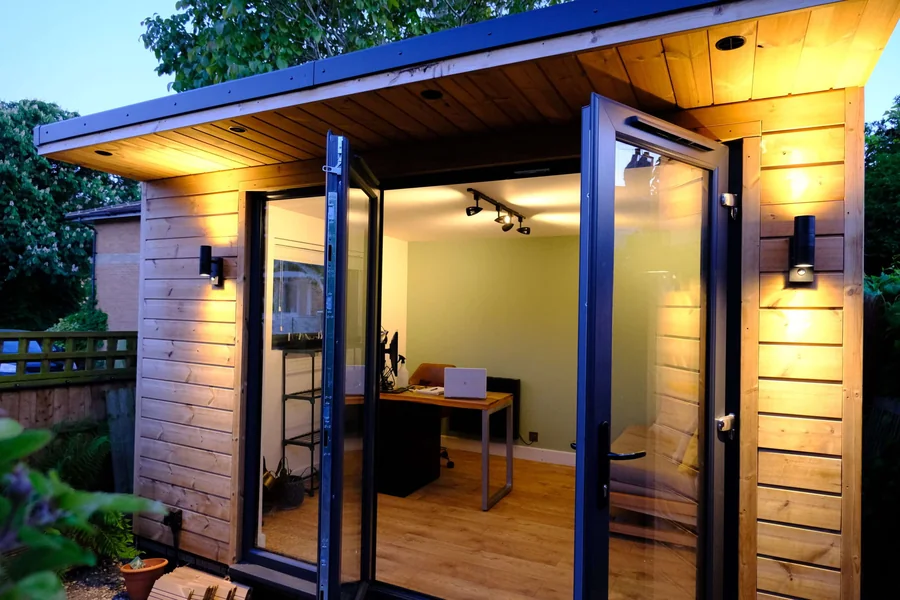
The shift towards flexible employment has fundamentally changed how Australians view their residential spaces. Working from the dining room table or a cramped spare bedroom may have been an acceptable temporary fix, but long-term productivity requires a dedicated, distraction-free environment. With the Australian Bureau of Statistics reporting that 36% of employed people usually work from home, the need for a separate professional area has never been more apparent. Creating a multi-purpose backyard workspace offers an excellent way to physically separate daily living from professional tasks, effectively preventing burnout without the massive expense and disruption of a traditional home extension. Moreover, a detached structure adds substantial versatility to your property, allowing you to seamlessly transition between focused work hours and relaxed weekend activities.
Establishing Your Spatial Needs and Requirements
Before pouring a concrete slab or running electrical cables, it is absolutely vital to define exactly how you intend to use the new area. Will it serve strictly as a quiet, professional office for daily video calls, or do you need a highly adaptable hybrid space that functions as an art studio, a home gym, or a teenage retreat on the weekends? Identifying these primary functions early on dictates the required square metreage, ceiling height, and internal layout. Planning ahead prevents costly modifications down the track and ensures the final build genuinely meets your lifestyle needs.
For many property owners, the most practical and cost-effective approach is starting with a robust, weather-resistant shell. Investing in premium custom made sheds provides a highly durable and adaptable foundation that can be easily transformed into a sophisticated backyard studio. Because these structures can be engineered to precise dimensions, you can maximise your available yard space while ensuring the exterior holds up to harsh Australian weather conditions. It is also wise to check local council regulations regarding boundary setbacks and building permits for permanent outdoor structures before commencing any earthworks. Taking care of the legalities upfront guarantees a smooth, uninterrupted construction process.
Key Elements of a Functional Design
Transforming a basic external structure into a comfortable, year-round workspace requires careful attention to the interior fit-out. A well-designed backyard room must be just as comfortable and inviting as the main house, otherwise, it will quickly fall into disuse. Treating the interior with the same care as your primary residence is the secret to a successful outdoor room.
To ensure maximum productivity and daily comfort, consider these essential design elements:
- Climate Control and Insulation: Proper thermal insulation in the walls and ceiling is completely non-negotiable. Pair this with a high-quality reverse-cycle air conditioner to efficiently handle extreme summer heat and chilly winter mornings.
- Acoustic Treatment: If your property is located near a busy road or you have noisy neighbours, investing in sound-dampening plasterboard and double-glazed windows will keep your audio clear during important meetings.
- Natural Light and Ventilation: Position windows and glass doors to capture gentle morning sunlight while actively avoiding the harsh afternoon glare. Adding an operable skylight can dramatically brighten the interior and provide excellent cross-ventilation.
- Power and Connectivity: Run a dedicated electrical sub-board from your main house to safely manage computers, lighting, and heating appliances. Additionally, installing a hardwired ethernet connection or a strong Wi-Fi mesh node is vital for seamless remote work.
Seamlessly Blending the Structure with Your Property
A newly built backyard workspace should never look like an afterthought awkwardly dropped onto the back lawn. It needs to visually complement your existing landscaping and the architectural style of your primary residence. Thoughtful placement, matching exterior paint colours, and the addition of complementary garden beds can beautifully tie the new building into its natural surroundings. If your main house features timber cladding, for example, incorporating similar wooden accents on the studio’s exterior creates an immediate visual connection.
Before committing to a final layout or exterior finish, reviewing a comprehensive guide to home renovation can help ensure your new outdoor addition aligns perfectly with your broader property enhancement goals. Connecting the workspace to the main house via a stepping-stone pathway, integrated outdoor lighting, or a raised timber deck creates a cohesive spatial flow. Planting tall, fast-growing native screening shrubs around the perimeter can also help soften the building’s edges, making it feel like a natural extension of your garden.
Building a multi-purpose backyard workspace is a highly rewarding investment that directly enhances your daily routine and your property’s overall appeal. By carefully planning your functional needs, prioritising internal comfort through clever design, and integrating the structure seamlessly into your landscape, you can create a private sanctuary that actively fosters focus and creativity. Ultimately, having a dedicated outdoor room ensures you can physically leave your work at the door at the end of the day, fully restoring the delicate balance between your professional obligations and your personal home life.