
Many homeowners pay close attention to the parts of their home they see every day. They clean gutters, repair roof shingles, replace windows, and care for landscaping. Yet the basement often gets less attention until water stains, damp smells, or puddles show up. Since the basement is below ground level, it is one of the most vulnerable areas of the home to moisture.
Basement waterproofing is an important part of protecting a home from moisture damage, especially in areas that receive heavy rain, changing temperatures, and seasonal groundwater pressure. Homeowners seeking more information on basement waterproofing and local services can visit basementwaterproofingfairfax.com to learn about common moisture issues and available solutions. A dry basement supports a healthier home, helps protect stored items, and gives homeowners more confidence in the condition of their property.
Moisture problems do not usually appear out of nowhere. They often begin with small signs that are easy to overlook. A musty smell, a small crack in the wall, peeling paint, or white powder on concrete may seem minor at first. Over time, these clues may point to a larger water issue that needs attention.
How Water Gets Into A Basement
Water can enter a basement in several ways. One of the most common causes is hydrostatic pressure. This happens when groundwater builds up around the foundation and pushes against basement walls and floors. When pressure becomes strong enough, water may enter through cracks, joints, or weak areas in the concrete.
Poor drainage also plays a major role. If gutters are clogged or downspouts release water too close to the foundation, rainwater may collect around the home. Soil that slopes toward the house can make the problem worse by directing water where it should not go.
Basement windows, pipe openings, and foundation cracks may also allow water to enter. Even small gaps can allow moisture to enter during storms or wet seasons. Since water follows the path of least resistance, a tiny opening may become a recurring source of dampness.
Why Basement Waterproofing Matters
Basement waterproofing helps control moisture before it leads to bigger problems. A dry basement protects more than the space below your home. It helps support the condition of walls, floors, framing, insulation, and personal belongings kept downstairs.
Moisture may also affect indoor comfort. Damp areas can create musty odors and make the basement feel less usable. If the basement is finished, water problems may damage flooring, drywall, trim, furniture, and electrical components.
Taking action early helps homeowners avoid larger repairs later. Instead of waiting for water to spread, waterproofing focuses on reducing moisture entry and managing water safely when it appears.
Common Warning Signs Of Moisture Problems
Homeowners should pay attention to changes in the basement. Damp walls or floors are one of the clearest signs that water may be entering the space. Water stains, dark patches, or streaks on concrete walls may also point to moisture movement.
Musty odors are another common warning sign. Even when water is not visible, smells may suggest hidden dampness behind walls, under flooring, or near stored items. Peeling paint, bubbling wall finishes, or warped materials should also be checked.
White powder on basement walls, known as efflorescence, appears when water moves through concrete and leaves mineral deposits behind. While the powder itself is not the main problem, it often shows that moisture is passing through the wall.
Interior Waterproofing Methods
Interior systems are designed to manage water that reaches the basement. One common option is an interior drainage system. This type of system collects water along the inside edge of the basement and directs it to a sump pump.
A sump pump moves collected water away from the home. For many properties, this is a key part of basement waterproofing because it helps remove water before it sits on the floor or spreads across the basement.
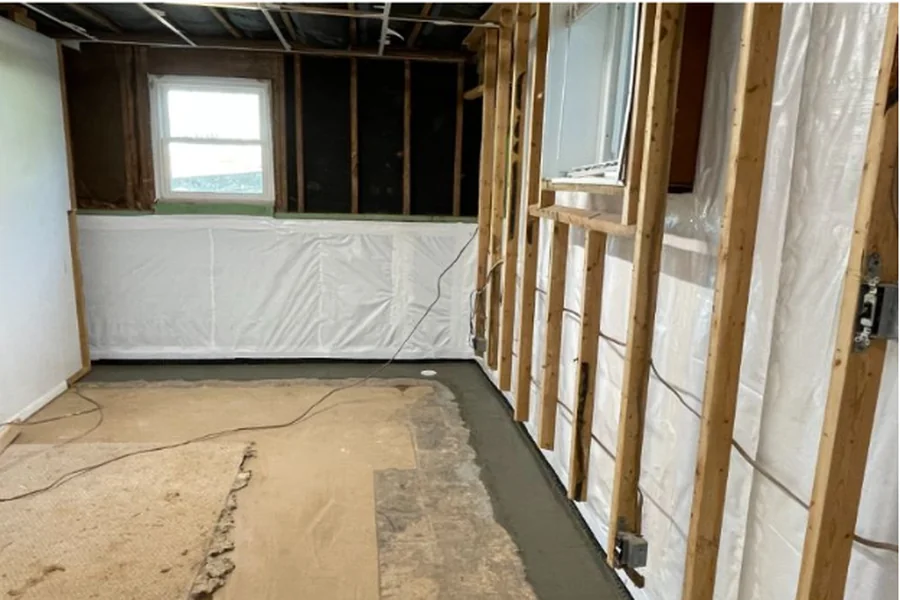
Vapor barriers may also be used to reduce moisture movement through walls. These barriers help direct water into the drainage system while creating a cleaner, drier wall surface. Interior methods are often useful when exterior digging is not practical or when water needs to be managed from inside the structure.
Exterior Waterproofing Methods
Exterior waterproofing focuses on keeping water away from the foundation before it enters the basement. This may include applying waterproof coatings or membranes to the outside foundation walls. Drainage systems may also be installed to move groundwater away from the structure.
Grading is another important part of exterior moisture control. The soil around the home should slope away from the foundation. When the ground slopes toward the house, water naturally travels in the wrong direction.
Downspout extensions can also make a major difference. Sending roof water several feet away from the home helps reduce pressure around the foundation. Clean gutters, proper drainage, and a healthy soil slope all work together to protect the basement.
Routine Maintenance Helps Prevent Trouble
Homeowners do not need to wait for a major water problem before paying attention to the basement. Regular maintenance can help spot concerns early. Gutters should be cleaned so rainwater flows freely. Downspouts should be checked after storms to see where water is going.
It is also smart to inspect basement walls and floors a few times each year. Look for new cracks, damp spots, or changes in odor. If the home has a sump pump, test it before the heavy rain season. A pump that fails during a storm can turn a small water issue into a much bigger headache.
Landscaping should also be reviewed. Mulch, soil, patios, and walkways should not trap water near the foundation. Small improvements outside may reduce the risk of basement moisture.
Why Professional Evaluation Matters
Every home is different. Soil conditions, drainage patterns, foundation materials, age, and past repairs all affect how moisture behaves around a basement. That is why a professional evaluation is so valuable.
A trained waterproofing specialist looks for the source of the problem, not just the visible symptom. For example, water on the basement floor may come from wall cracks, poor exterior drainage, a window well, or pressure beneath the slab. Finding the correct cause leads to a better repair plan.
For additional information about moisture and mold prevention in homes, homeowners can review guidance from the U.S. Environmental Protection Agency at https://www.epa.gov/mold.
Conclusion
Moisture damage can create serious problems when ignored. Damp basements may affect stored belongings, finished living areas, indoor comfort, and building materials. The good news is that homeowners have practical ways to reduce moisture risks and protect their property.
Basement waterproofing provides homeowners with a proactive way to manage water, improve basement conditions, and protect the home’s lower level. By watching for warning signs, maintaining proper drainage, and getting a professional inspection when needed, homeowners can make smart decisions before small issues become costly repairs.
If you are ready to protect your home from moisture damage, contact Fairfax Basement Waterproofing today. The team provides professional basement inspections and waterproofing services designed to help Fairfax homeowners keep their basements drier, cleaner, and better protected.